
Inside the Role of a School-Based Mentor: Supporting KMT Trainee Teachers
What do you consider to be the most important attributes of a successful school-based mentor?
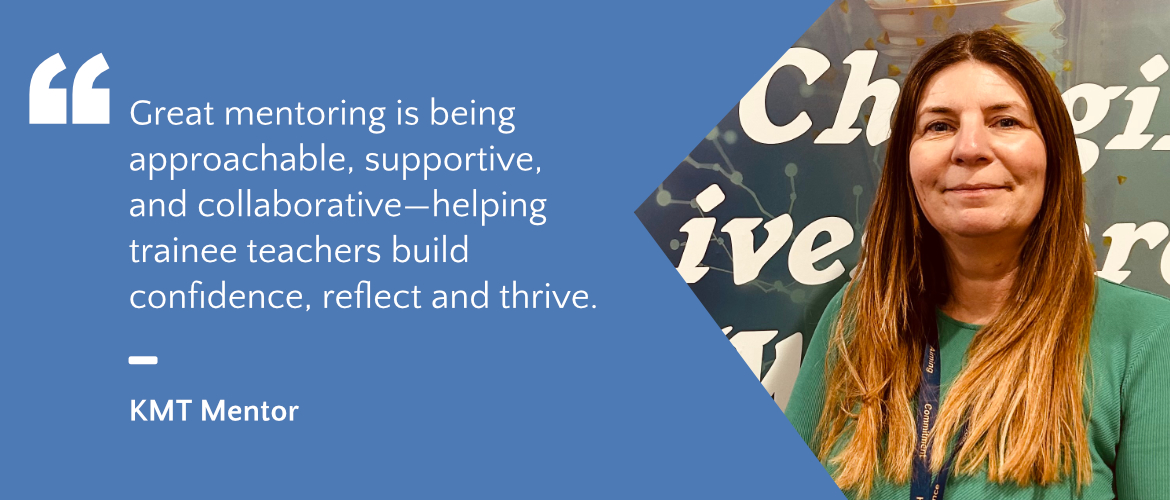
Being an effective school-based mentor is firstly to be available and approachable; someone who is conscious of what a great privilege it is to support the development of a new teacher. These attributes are essential for the progress of the trainee teacher and lead to a successful, collaborative relationship. Having the ‘done with’ not ‘done to’ approach to mentoring enables you to demonstrate to your trainee that teaching is not a tick list of achievements but a holistic journey that may have a few bumps along the way.
Mentoring is not just a weekly meeting and observation but a chance to work closely with a new colleague who brings a wealth of their own experiences along with passion, energy and current pedagogical thinking.
In Maya Angelou’s words, “I’ve learned that people will forget what you said, people will forget what you did, but people will never forget how you made them feel”.
The role of a school-based mentor is wide and varied. In your opinion, what are the most crucial aspects?
With every school-based event, initiative or CPD, it is important to consider how this will affect your trainee teacher. As their mentor, it is crucial that you advocate for them, supporting them to manage some of the seemingly smaller issues such as changes to timetables, classes and break time duties. It’s important to ensure these changes don’t affect their working week or wellbeing.
With this, it is also important to see any opportunities that may become available for your trainee such as attending useful meetings, working with external agencies or taking opportunities to engage with enrichment activities to build positive relationships with both students and staff.
KMT places a high priority on AT wellbeing. How do you, as a school-based mentor, support with this?
In line with KMT’s focus on wellbeing, every meeting and interaction with the trainee teacher should have this focus. Having the ability to set this as a target is really useful as it can help your trainee take a step back to realise that they, along with their mental and physical health, are important.
Discuss your own ways of managing wellbeing and workload without overwhelming them with any particular stresses or worries you might have at the time.
Most importantly, make sure your trainee views prioritising wellbeing as an essential part of being a teacher and not a weakness to be hidden.
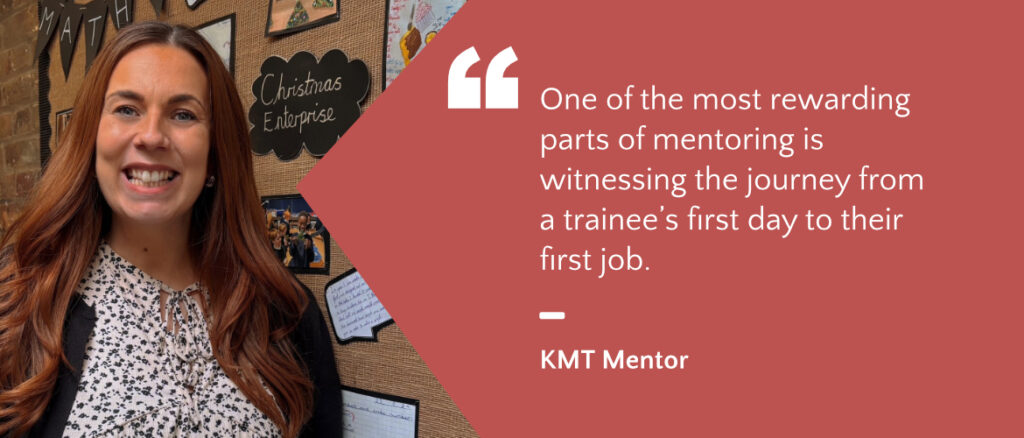
What is the most rewarding part of seeing a KMT AT grow from their first day to their first job, and how does KMT help you facilitate that journey?
There are so many ways that trainee teachers demonstrate growth from their first day but there are two key moments worthy of mention. Firstly, when positive connections have been made with a particular class; you can see and feel the difference in the classroom. Students and the teacher are more relaxed and there’s palpable joy in the room.
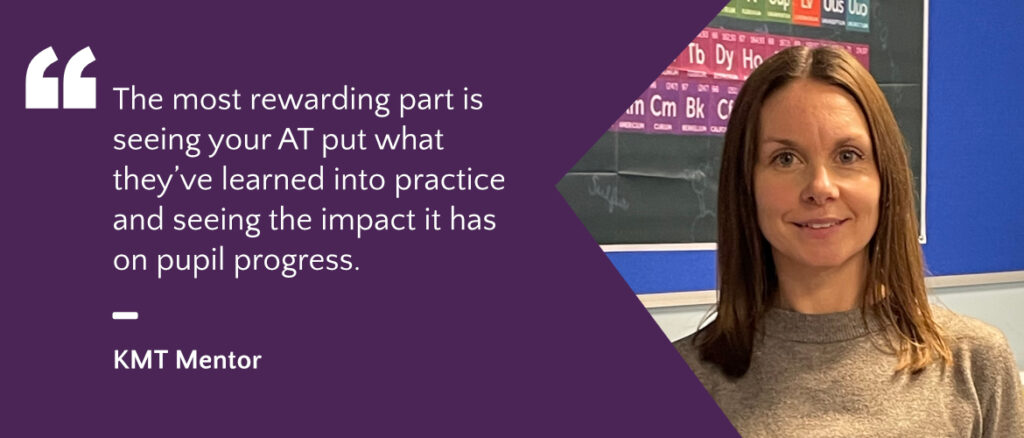
Another way is when a teacher confidently and creatively adapts a lesson to meet the needs of their class. This encompasses their reflective practice along with the knowledge they’re gaining from each KMT training session and school-based opportunity.
There is no doubt that to achieve this confidence in the classroom, the trainee teacher has engaged well with all of the training that KMT offer and have been supported consistently well by experienced staff in a well-structured programme.
Do you have any top tips for future KMT trainees on how to get the most out of their relationship with their mentor?
- Be open and honest with your mentor; they are genuinely there to support and guide you, not to judge or criticise.
- Plan a school trip or enrichment activity together. It can be lots of fun and a great way to build connections with students and other staff.
- Always ask a question, no matter how seemingly trivial it might be. If your mentor can’t answer, they will always find someone who can.