

Keys to Effective School-Based Mentoring: Excellence and Wellbeing
What do you consider to be the most important attributes of a successful school-based mentor?
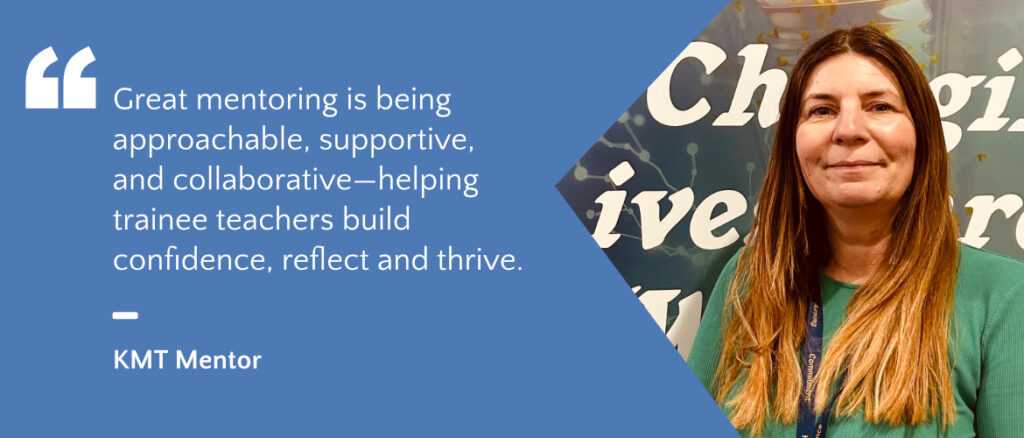
The most successful school-based mentors understand that they are not just teaching skills, but are nurturing a professional identity. For an experienced teacher, classroom management and pedagogical pacing often become instinctive, almost like muscle memory. A great mentor has the metacognitive clarity to pause, look under the hood of their own practice, and explain the why behind a split-second decision to a trainee who is still seeing the classroom through new eyes. Beyond this technical transparency, a mentor must possess a high degree of emotional intelligence and humility. By modelling their own ongoing growth – and being honest about their own lesson ‘flops’ – they create a psychologically safe environment where a trainee feels empowered to take risks and grow, rather than being paralysed by the pursuit of an impossible perfection.
The role of a school-based mentor is wide and varied. In your opinion, what are the most crucial aspects?
Schools are complex ecosystems with unwritten rules, internal politics, and a pace that can quickly lead to burnout for the uninitiated. The mentor’s role is to demystify these institutional norms while providing a psychologically safe space for trainees to feel welcomed and flourish in the profession. Ultimately, the most vital part of the job is balancing this rigorous pedagogical critique with a level of advocacy that makes the trainee feel like a valued, permanent member of the teaching community from day one.
KMT places a high priority on AT wellbeing. How do you, as a school-based mentor, support with this?
You must practice what you preach, so to speak. This involves modelling a sustainable work-life balance; showing ATs that “excellence” does not require total eclipse of personal lives, and providing a dedicated, non-judgmental space for debriefing. I make it a point to normalise the lows of the training year, validating frustrations and reminding them that a not-so-great lesson is a learning opportunity, not a character flaw. By integrating wellbeing into our weekly meetings as a standing agenda item, I make clear that wellbeing is a professional priority, not an afterthought. Ultimately, I aim to foster a culture of psychological safety where the AT feels they can be honest about their struggles, without it being framed as a lack of competence.
What is the most rewarding part of seeing a KMT AT grow from their first day to their first job, and how does KMT help you facilitate that journey?
There are too many rewarding moments to truly focus upon just one; every time that ‘lightbulb moment’ hits, every time the AT successfully delivers a lesson or improves on something previously, it reminds me of why high quality training is so important. KMT facilitates this journey by providing a robust, evidence-informed framework that aligns the mentor’s intuition with a clear developmental trajectory. The partnership doesn’t leave the mentor isolated; instead, it offers a shared language through its curriculum and assessment structures, ensuring that the feedback I provide is part of a cohesive standard of excellence. KMT’s commitment to high-quality mentor training means I am empowered to deliver the right intervention at exactly the right stage of the AT’s development. This synergy between the school-based reality and KMT’s support ensures that the journey from novice to ECT is a deliberate, successful evolution.
Do you have any top tips for future KMT trainees on how to get the most out of their relationship with their mentor?
Your mentor is there to help you navigate the start of your journey, but they can only guide you if you are honest about where you are. Instead of trying to hide your struggles, lead with them; a trainee who says for example; “I felt my transition from the starter activity was clunky; how can I tighten that up?” demonstrates a level of professional maturity that far exceeds someone trying to pretend every lesson was a triumph. By framing your challenges as specific, technical questions, you turn every feedback session into a masterclass tailored to your immediate needs.