
The KMT Mentor Journey: Building Confidence from First Day to First Job
What do you consider to be the most important attributes of a successful school-based mentor?
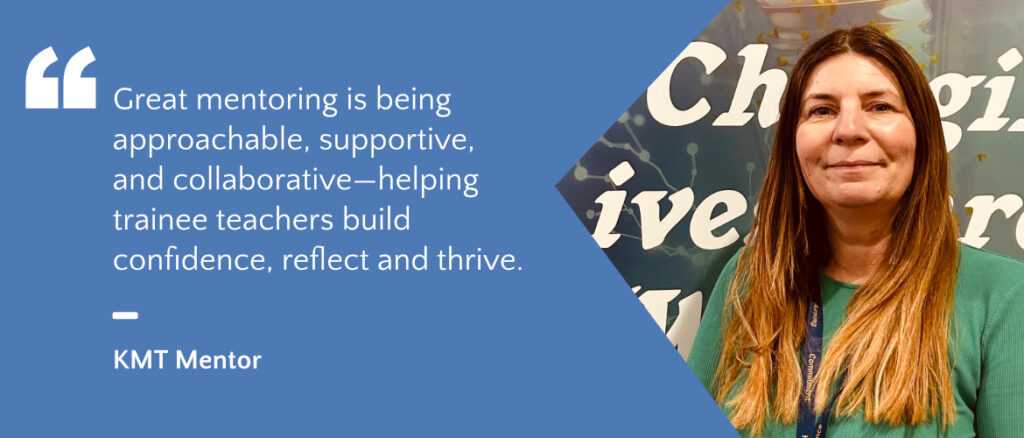
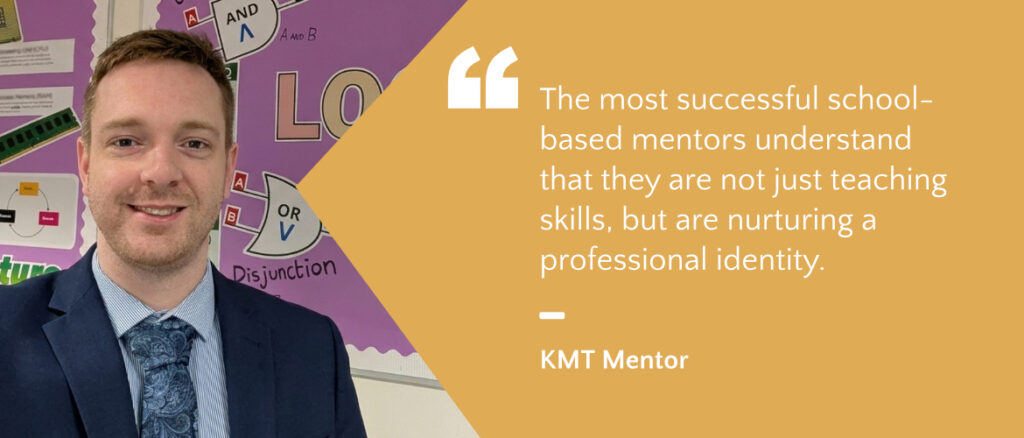
I believe that having the ability to create strong and supportive relationships, where trainees feel confident to ask questions and learn from mistakes, is one of the most important attributes that a school-based mentor should have. Mentors need to be approachable and patient and able to provide constructive feedback, enabling trainees to try new things and implement change in their practice. The ability to coach and guide trainees and develop reflective practice is also an important part of being a mentor in order for trainees to take ownership of their development and feel empowered.
The role of a school-based mentor is wide and varied. In your opinion, what are the most crucial aspects?
In my opinion, one of the most crucial aspects of a schoolbased mentor is to build a supportive and trusting relationship, where mentors can challenge trainees constructively whilst maintaining confidence and wellbeing. I feel that this is a crucial part of the mentor role and a strong relational foundation is key for the trainee’s development. Additionally, I feel that consistency and structure are also crucial aspects of a mentor’s role – regular meetings, communication, documenting progress help to ensure the trainee remains on track.
KMT places a high priority on AT wellbeing. How do you, as a school-based mentor, support with this?
Supporting trainee wellbeing is a central part of the role as a schoolbased mentor. I feel that my approach ensures trainees feel valued, supported, and able to thrive. Key ways I try to do this include helping trainees to manage workload and prioritise their tasks effectively. At times, teaching can feel intense for trainees; supporting them to manage workload expectations and helping them to break tasks down can support them to manage realistic workload expectations. I also try to create an environment where trainees feel comfortable to share worries, challenges and successes through regular check ins and being approachable.
What is the most rewarding part of seeing a KMT AT grow from their first day to their first job, and how does KMT help you facilitate that journey?
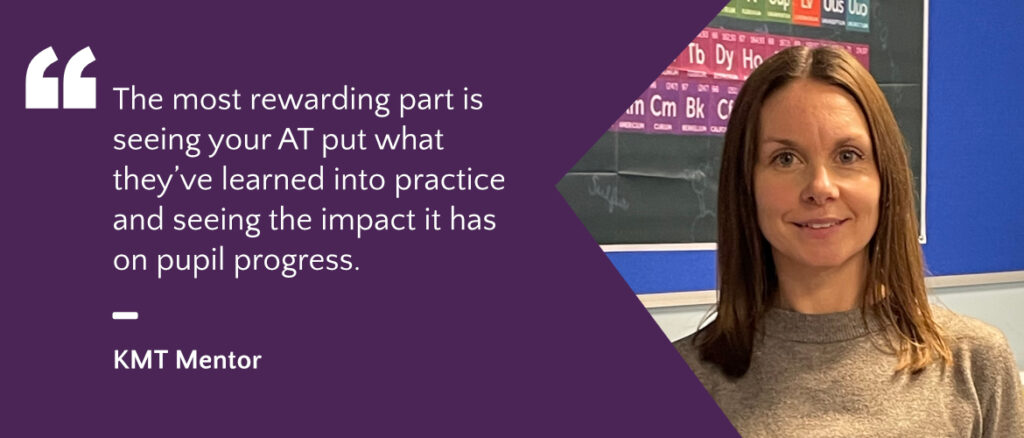
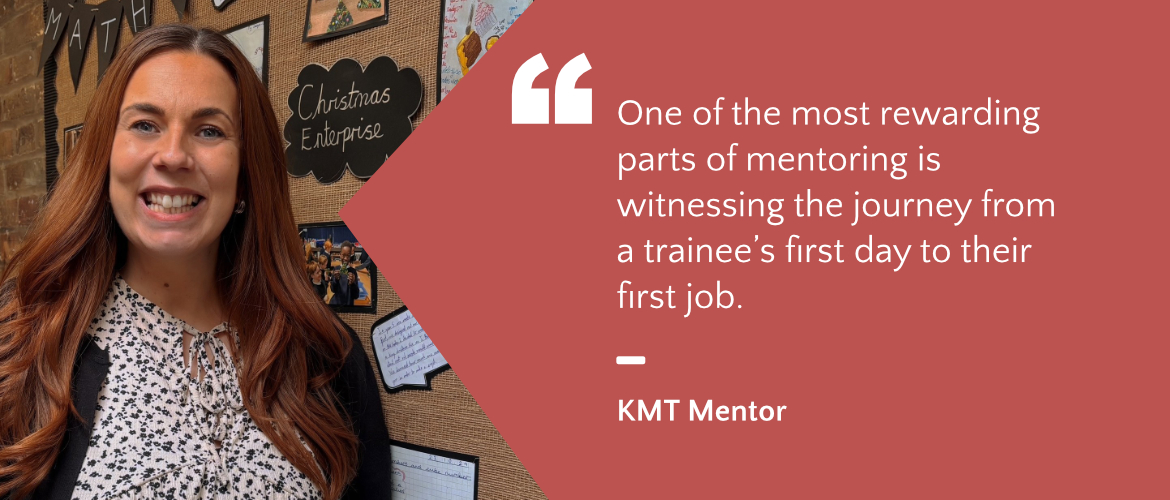
For me, one of the most rewarding parts of mentoring is witnessing the journey from a trainee’s first day in the classroom to the moment they step confidently into their first teaching role. Observing the trainee’s confidence flourish with how they make decisions, trust their judgements and develop their own teaching style is incredibly fulfilling. Knowing you had a role in helping a trainee grow and supporting them to believe in themselves is one of the most gratifying aspects of the mentoring role.
KMT helps to facilitate this by providing a wellsequenced, structured training programme that gives both mentors and trainees clarity. This alignment ensures that weekly targets, observations, and training sessions all work together, making development more purposeful and coherent.
Do you have any top tips for future KMT trainees on how to get the most out of their relationship with their mentor?
Building a strong relationship with your mentor can make your training year more successful, manageable, and enjoyable. Try to be open and honest from the start, share your worries, strengths, and areas you feel less confident in. This openness builds trust and helps your mentor tailor their support effectively. It’s normal to feel overwhelmed at times. Instead of worrying about mistakes, use them as stepping stones — discuss them openly with your mentor so you can break them down together. Finally – remember that your mentor wants you to succeed! Make sure to share your wins, however small!