
The Power of Mentorship: A School-Based Mentor’s Perspective at KMT
Meet Abi, a compassionate mentor known for her expert subject knowledge and meticulous approach to trainee development. From strategic timetable planning to supportive weekly check-ins, Abi blends expert pedagogical mentorship with genuine care. She doesn’t just teach people how to lead a classroom—she empowers them to find their own unique voice as educators.
What do you consider to be the most important attributes of a successful school-based mentor?
I think mentors need to be supportive and approachable. An AT should always feel comfortable seeking professional guidance from their mentor. It’s also important that mentors stay committed to their own professional development. Mentoring has helped me stay up to date with current educational research, and sometimes I find myself learning alongside my AT, which is a really positive experience.
The role of a school-based mentor is wide and varied. In your opinion, what are the most crucial aspects?
Encouraging reflective practice is key. ATs make the most progress when they can recognise their own strengths and areas for development. Sharing expertise and practical strategies is also really important.
KMT places a high priority on AT wellbeing. How do you, as a school-based mentor, support this?
The structure of the weekly mentor meetings means we always make time to talk about workload and wellbeing. Having those regular conversations helps to normalise any challenges and means support can be offered early, before things become overwhelming.
What is the most rewarding part of seeing a KMT AT grow from their first day to their first job, and how does KMT help you facilitate that journey?
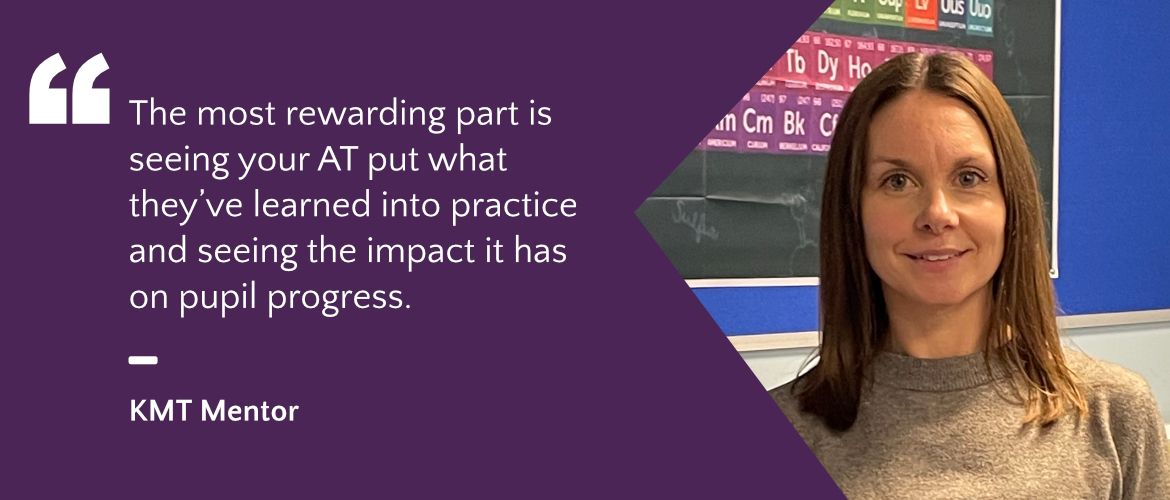
The most rewarding part is seeing your AT put what they’ve learned into practice and seeing the impact it has on pupil progress. KMT’s curriculum and mentoring structure ensure that skills are built step by step, and mentors know exactly what training has been delivered each week. That makes it much easier to help ATs turn educational theory into confident classroom practice.
Do you have any top tips for future KMT trainees on how to get the most out of their relationship with their mentor?
Be open and honest. If you’re struggling with workload or need to develop your subject knowledge in a particular area, talk to your mentor about it. Your progress will be much quicker if you’re clear about what you need and you’re working towards the right targets together.
“Abi’s support has been a lifeline. She gave me the confidence to keep going when things were tough and has made my training year both successful and truly enjoyable.”
Quote from AT